Hello, I'm

Rodrigo de Miguel

Entrepreneur · Product Engineer · Data Architect

I build things that should exist.

Software, data, AI, and product: connected from start to finish.

I've worked in Big Data, SaaS, SEO, e-commerce, and my own physical products. Technologies change. The obsession remains the same: getting a good idea into someone's hands.

I've learned more by launching products than by accumulating courses and technical knowledge.

Today, that drive has a name: TalkFlux AI.

Periodista Digital Merca2 Moncloa.com El Confidencial Digital Qué.es

and more...

About Me

Software Engineer. Founder mindset.

Software · Data · AI · Product

I build digital products from start to finish: architecture, data, product, automation, and growth.

My career began in Big Data, in the innovation department at SCIB · Banco Santander, working with real-time systems and distributed processing. There, I worked with Kafka, Flink, Spark, Hive, and Hadoop, and developed a proof of concept for GraphQL capable of dynamically generating its schema from AVRO definitions.

In 2020, I left the corporate world to build things on my own.

Perfect code is of little use if no one can find it, understand it, or use it.

Since then, I’ve been working at the intersection of engineering, data, product, and business. I’ve built SaaS platforms, data pipelines, SEO products, automations, e-commerce solutions, and AI-powered tools.

ADOPTA encapsulates much of that journey. It started as a platform to facilitate pet adoption and eventually grew to encompass software, data, SEO, and its own brand of natural dog and cat food.

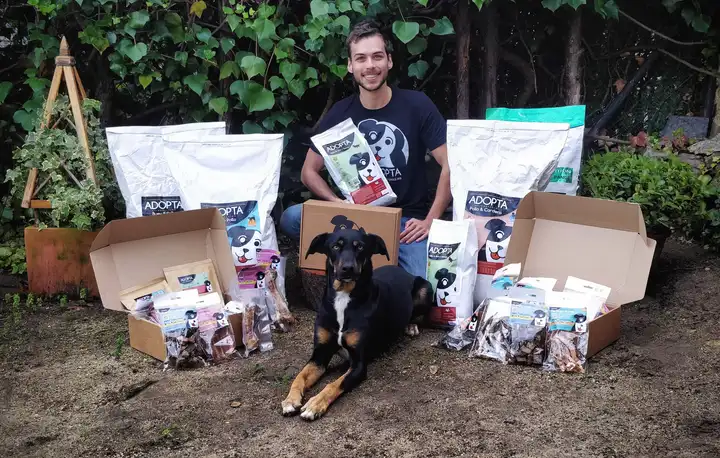
With ADOPTA · Food, I learned to take a product beyond the code: building a brand from scratch, working with suppliers, designing packaging, coordinating logistics, managing customers, selling, and deciding where it made sense to invest the next euro. It was probably the experience that taught me the most about thinking of a product as a business, not just as software.

While working on ADOPTA, data issues also arose that would eventually lead to PetFriendly and, later, SietchStack: scattered information that needed to be converted into reliable, reusable data—and then into systems capable of launching new products without having to rebuild everything from scratch. At the same time, I soon began experimenting with LLMs and automated content generation, eventually producing over 60,000 articles in one of those experiments.

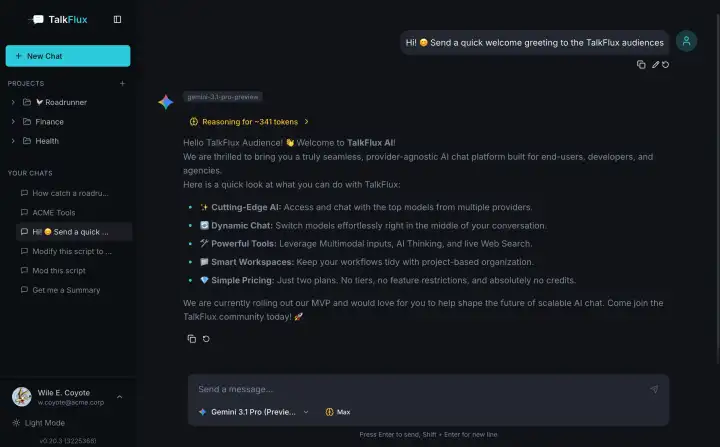
Today, I’m developing TalkFlux AI, a multi-provider chat SaaS that allows users to switch models during a conversation without losing context.

I’m still pursuing the same idea: building capable systems without making them unnecessarily complex.


Build

It's thinking

CODECRAFTER

Designed for the real world.

Launching your own products changes the way you think.

You stop seeking elegance in your code and start focusing on what stands up to the test of users, markets, and reality.

That's where you learn the most: when engineering, data, product, distribution, and business are no longer separate pieces, and you have to make it all fit together.

COMPLEXITY HAS A COST

Every layer leaves its mark.

More code. More infrastructure. More ways to fail. More things to maintain.

On paper, everything works until you put it into practice. I prefer small, clear systems with room to grow.

Complexity is worth it when it solves a real problem.

AI

AI where it adds value.

AI has changed the way I develop. And what I develop.

I use it to think faster, explore more, write code, run tests, research, and automate tasks that used to take me hours.

I don't add AI just because it's trendy. I add it when it changes what the product is capable of doing.

Products

What I've Built

From architecture and data to distribution and business. Some are still in production. Others have ended. They all tell a part of my story.

Multi-provider AI chat SaaS: switch models mid-conversation without losing context.

I wanted to stop paying for multiple subscriptions and jumping between platforms to reach frontier models, without giving up the ability to compare and switch models when needed.

TalkFlux started as an internal tool to solve a need I had myself: access to the best models from different providers without maintaining multiple subscriptions, using the APIs and paying only for actual usage.

The first version was very simple: conversations, projects, and model switching during a chat. Seeing that the problem was quite common, I decided to turn it into a product.

That involved much more than the chat: authentication, access control, Free/Flex/Own Key plans, usage tracking, a prepaid wallet, BYOK, and billing with Stripe.

The product is still small and evolving, but it is already in production and open to new users. The next stage is expanding its capabilities without losing the simplicity that motivated it.

SietchStack

A configuration-driven platform for launching multi-tenant niche directories from a single codebase.

Create and operate multiple SEO products without duplicating the application code or developing a separate implementation for each niche.

With everything I learned while building ADOPTA, I started SietchStack as a way to take it a step further: a multi-tenant platform for launching multiple niche directories from a single codebase, with data ingestion, LLM-based enrichment, and an SEO-first approach.

Every product is defined by configuration — entities, routes, sitemap, language, design and components — without touching the application core. That let me iterate and launch new directories focusing on the infrastructure rather than on a single product.

I shelved it when AI Overviews changed the playing field and the SEO thesis I started with stopped holding up. The foundation is built, and if the landscape becomes interesting again I would not rule out picking it back up.

A natural pet food brand, built from the ground up through to the final sale.

I built a natural dog and cat food brand from the ground up and took it from concept to nationwide sales. Product, brand identity, e-commerce, and operations: everything had to fit together. It was an exercise in pure bootstrapping, where every decision counted and every euro had to be put to good use.

I had to do it all. Design pet food and treats, talk to and negotiate with suppliers, work on packaging, set up and customize Shopify, coordinate the warehouse and shipments, assist customers, and close sales. When I needed to learn something new, I learned it. When something needed to be solved, I had to do it.

Technology was there to multiply resources. I built automations, email marketing workflows, and customer acquisition and retention processes; I connected the e-commerce platform with the rest of the ADOPTA ecosystem and experimented with advertising, funnels, and SEO. There wasn’t a huge team behind it. I had to make sure all the pieces worked together.

And there was a reason for doing it that way. The proceeds from food sales helped fund ADOPTA, the free platform for animal shelters and rescue organizations. Every purchase had a second purpose: in addition to feeding a dog or cat, it helped sustain a platform created to help more animals find homes.

See all press mentions

Technology to raise awareness about adoption and help every animal find a home.

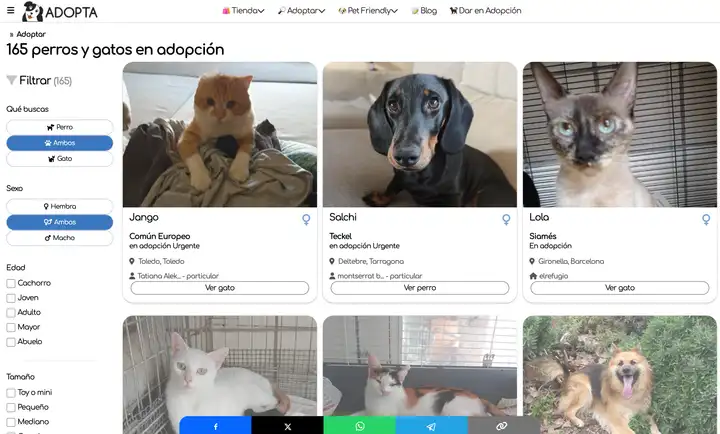
ADOPTA was born from something much simpler than a business idea: seeing a problem up close. While I was studying and working, I volunteered at an animal shelter in my town. There, I discovered a reality that was hard to ignore: shelters with limited resources trying to care for animals while also ensuring that the right people could find them.

I started Adopta un animal near the end of my college years. I developed it during my master"s program while juggling my job, gradually turning an initial idea into a platform designed to address a real problem: making it easier to post, find, and manage animals up for adoption.

Over time, it became the brand ADOPTA. I built the product from start to finish: architecture, backend, frontend, admin panels, and the infrastructure needed to grow organic visibility. On one hand, animal shelters could manage their animals; on the other, adopters had a simple experience to discover dogs and cats, filter results, and learn each animal"s story.

Over time, ADOPTA ended up being much more than just the first product I built. It became the starting point for a family of projects centered around animals, data, SEO, and automation. That's where I learned that building a product means first understanding the problem and then finding the right technology to solve it.

See all press mentions

A map to discover everything that matters to animals

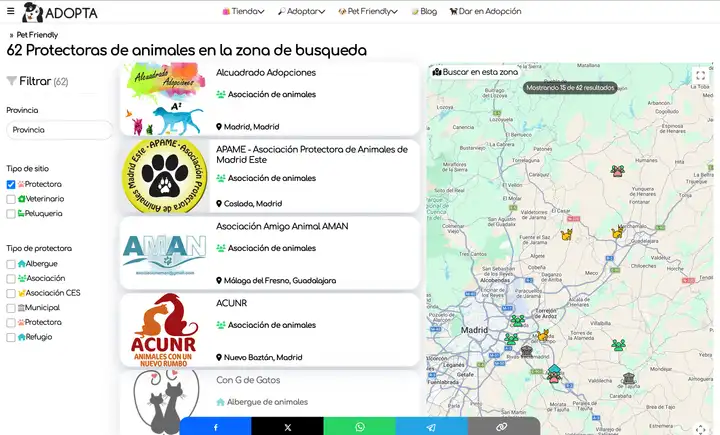
Finding an animal shelter in Spain should be easy. It wasn't. The information was scattered across directories, websites, maps, files, and local pages, often with different names and incomplete details. I wanted to bring it all together in one place and make finding an animal shelter as simple as looking at a map and seeing what was nearby.

I built a data ingestion engine in Node.js capable of collecting data from a wide variety of sources—APIs, scrapers, files, and open data—and converting it into consistent information. The challenge was to group together entries belonging to the same location, remove duplicates, and normalize unstructured data: entity resolution, text similarity, blocking, and data cleansing all working together to support a simple user experience.

The result was a directory with more than 1,700 shelters and animal rescue organizations—the largest in Spain—displayed on a map and searchable by location and filters. I later expanded the idea to also include veterinarians and other pet services, creating custom listings and programmatically generated pages to give each business visibility.

Pet Friendly was born out of a very specific need and ended up becoming one of the projects that taught me the most about data, SEO, and reusable systems. What began as a map of animal shelters would end up laying part of the foundation for what I would later build with SietchStack.

See all press mentions

I wanted to see how far AI could go. I ended up publishing 60,000 articles.

When GPT-3 and GPT-3.5 first started appearing, back in 2022, my curiosity was piqued: How far could generative AI go if I connected it to structured data and programmatic SEO? Within ADOPTA, I set up a small lab to find out. The starting point was Google’s People Also Ask; the goal was to automatically generate useful content about virtually any dog or cat breed.

I compiled information, images, and data on 336 dog breeds and 94 cat breeds, designed the generation system, and ended up publishing more than 60,000 articles on characteristics, care, and nutrition. All built on WordPress, with LLMs processing structured data and an architecture designed to produce content at a scale that would have been impossible to write by hand.

It was probably one of my most fun experiments. It was also one of the ones that best taught me where tricks end and reality begins. The project lasted until Google deactivated the domain during a Core Update. Looking back on it from 2026, with generative AI having become an everyday tool, it seems almost prehistoric. But that’s precisely why I’m keeping it: because it was one of the first times I truly saw how data + code + AI + distribution could become a system capable of producing something on a completely different scale.

Local SEO Consulting

Putting businesses that barely had a digital presence on the map—literally.

For a while, I helped some local businesses take their first steps into the digital world. I worked on their Google Business Profile and their visibility in local searches, turning businesses that barely had an online presence into places that were easier to find.

It was a small phase, almost parallel to the rest of my projects, but it helped me get back to something very basic: technology only matters when it brings someone closer to a real business. A better-crafted profile, a well-optimized search result, and a customer who finds what they need can be enough to change the story.

Career Path

Years of building in production

Projects, teams, and decisions that have shaped how I think, build, and work.

AI Product Engineer and Technical founder

AI Product Engineer and Technical founder

2026 - Present

TalkFlux AI — SaaS chat platform with multi-model, multi-vendor AI

Design and development of TalkFlux AI, a SaaS solution born out of a personal need: the ability to work with state-of-the-art models from different providers in a single place, switching between models during a conversation without losing context.

  • Design of a provider-agnostic backend, based on hexagonal architecture, where each AI provider is integrated as an independent adapter behind a common contract.
  • Development of a real-time chat experience with SSE, projects, and conversations, allowing switching between models during the same conversation.
  • Design and implementation of the complete product system: authentication, access control, Free/Flex/Own Key plans, usage and consumption, prepaid wallet, BYOK, and integration with Stripe.
  • Definition and end-to-end development of the product: from the idea and specifications to architecture, implementation, testing, CI/CD, observability, and launch.
  • Deployment and opening of the product to new users, iterating on a real usage base rather than a purely experimental project.
Product Engineer & Platform Builder

Product Engineer & Platform Builder

2025 - 2026

SietchStack — Multi-tenant platform for niche directories

Building a configuration-based platform to launch and operate multiple niche directory products using a single codebase.

  • Designing a declarative ingestion and scraping engine, where pipelines are defined via configuration, making the flows explicit, modular, and easy to extend.
  • Developing LLM-powered data enrichment pipelines to automate part of the content generation and transformation process.
  • Designing an architecture based on reusable services, components, and configuration, avoiding product-specific implementations.
  • Developing the platform using Node.js and ReactJS, with a focus on scalability, automation, and rapid iteration.
  • Implementing an SEO-first architecture to manage routes, structured data, sitemaps, and reusable content patterns.
  • Exploring a product model geared toward launching multiple niche products without duplicating the underlying infrastructure.

Status: On hold while I evaluate the impact of changes to Google’s SERPs due to the addition of AI Overviews

Founder & Product Operator (D2C E-commerce)

Founder & Product Operator (D2C E-commerce)

2022 - 2025

ADOPTA Alimentación — Natural pet food D2C brand (kibble and snacks)

Creation and operation of a natural pet food D2C brand, selling directly to end customers across Spain.

  • Shopify e-commerce: development, customization, and daily operations
  • End-to-end management of suppliers, logistics, shipping, and customer support
  • Automation of communications and email marketing focused on retention
  • Merchandise design with print on demand and packaging

Key project where I learned how to connect product, technology, and operations when everything depends on the business working from day one.

Founder & Product Operator (Print on Demand E-commerce)

Founder & Product Operator (Print on Demand E-commerce)

2022 - 2023

Creation and launch of a print-on-demand e-commerce store for custom t-shirts, with original animal-themed designs.

  • Building the e-commerce store and purchase flow in Shopify
  • Integration with print-on-demand providers
  • Catalog management, pricing, and product testing
  • Basic order and customer support automation
  • Real product validation experiment: acquisition and conversion

Project that didn't reach the expected fit, but was key to understanding e-commerce dynamics, margins, acquisition, and why some products don't scale even if they work technically.

Local SEO Consultant (Local Growth)

2022 - 2023

Managed digital presence and Local SEO (Google Business Profile) for brick-and-mortar businesses, helping digitize local SMEs

  • Digitizing SMEs through Google Business Profile
  • Local SEO and digital presence automation for brick-and-mortar businesses
Data & Platform Engineer (Programmatic SEO)

Data & Platform Engineer (Programmatic SEO)

2021 - 2026

ADOPTA - Pet Friendly — Pet-friendly directory for animal shelters

First version of the ingestion engine (with config-driven pipelines in NodeJS) to aggregate shelter data from multiple sources (APIs, scrapers, files, open data) across Spain and publish it in an SEO-optimized directory with an interactive map.

  • Aggregating shelter data from multiple sources (APIs, scrapers, files, open data)
  • Data normalization and cleaning to ensure quality and consistency
  • Pet-friendly directory with more than 1,700 shelters in Spain
Founder & Product Engineer

Founder & Product Engineer

2020 - 2026

ADOPTA — SaaS platform for animal shelters

End-to-end digital product design and development: from architecture to growth.

  • Managing animals for adoption
  • AI-automated blog (Programmatic SEO)
Big Data Engineer — Indizen (at Banco Santander)

Big Data Engineer — Indizen (at Banco Santander)

2018 - 2020

At SCIB (Santander Corporate & Investment Banking), I worked on real-time data systems, combining real-time data processing with microservices architecture.

  • Development of critical real-time systems with Apache Flink, Kafka, and microservices
  • Migration from batch architectures to real-time using Spark, Hive, and Hadoop
  • Creation of Banco Santander's first GraphQL API. An API with dynamic GraphQL schema generation from AVRO schemas, able to adapt to changes at runtime
  • Design and development of product-consumable microservices in Big Data real-time environments
  • Processing large volumes of financial data

Education

Master's in Big Data Architecture

Master's in Big Data Architecture

KSchool · 2018 - 2019

Specialized training in large-scale data architectures, distributed processing, and systems designed for performance and reliability. The technical foundation that consolidated my move into complex, real-time data environments.

Big Data Technologies Training Program

Big Data Technologies Training Program

Indizen · 2018 (1 month)

An intensive program focused on real production environments, centered on the Big Data stack later used in projects for Banco Santander. Hands-on training prior to joining critical data projects.

Software Engineering Degree

Software Engineering Degree

Complutense University of Madrid (UCM) · 2012 – 2018

Solid training in software engineering fundamentals, data structures, algorithms, systems, databases, and application development. The technical starting point on which I’ve built my professional profile.

Publications

Securing J2EE SOA Enterprise Applications with a Pattern-Based Approach

Open Journal of Web Technologies (OJWT), RONPUB, 2020

Co-author of a study that developed a service-oriented web architecture based on J2EE, linking security patterns (CSP) with architectural patterns (CJP) to facilitate secure implementation of enterprise SOA applications.

The work originated from my Bachelor’s Thesis (2017–2018), where I developed the base architecture, deployed on Apache Tomcat and integrated with CI using Jenkins, GitHub, Maven, and JUnit.

Technical Stack

Technology at the Service of the Product

I choose tools based on what they allow me to build, not on trends.

A stack defined by years of production experience.

AI & LLMs applied to product and development

Automation, Data, and AI-Assisted Coding

I integrate AI into real-world products and processes, from content enrichment and generation to direct interaction with models and the automation of development tasks.

  • LLMs integrated into products: experience working with APIs from OpenAI, Anthropic, and Google, designing vendor-agnostic integrations, and using models for inference, data enrichment, content generation, and automation.
  • Content generated from real data: I use LLMs to transform structured data, reviews, ratings, location, context, and other signals into useful content, rather than relying on static templates or generic content.
  • Context & Prompt Engineering: designing prompts, instructions, and context as part of the system. Documentation, architecture, and explicit rules so that both LLMs and development agents can work with the necessary context.
  • AI as part of development: SDD (Spec-Driven Development), agents to explore solutions, implement features, refactor, and maintain complex architectures, without delegating technical judgment or design decisions to them.

What I Bring to the Table

  • AI integrated as part of the system, not as an isolated feature.
  • Architectures prepared to switch models or providers without redoing the product.
  • Automation that turns data and context into useful results.
  • Faster development without sacrificing design, testing, and maintainability.

— And yes, all this while learning not to spend tokens as if they were free 😅

The best architecture for an LLM is usually the one that provides it with the necessary context and nothing more.

LLMsAI Product EngineeringOpenAIAnthropicGeminiContext EngineeringAI IntegrationAutomation

Backend & Data

Building systems and data processing

I design and build product-oriented backend systems that can scale and adapt to real-world usage.

  • APIs and services in Node.js
  • Data modeling and management with MongoDB
  • Real-time data processing with Kafka and Flink
  • Batch pipelines and analytics with Spark
  • Automation and scripting with Python

What I Bring to the Table

  • Event-driven architectures
  • Systems designed to grow without rewriting them
  • Technical decisions based on real usage, not theory
NodeJSMongoDBApache FlinkKafkaSparkREST APIsPython (solo scripting)Event-Driven ArchitectureMicroservicesDatapipelinesReal-time Processing

Frontend

Interfaces focused on real usage

I build functional, maintainable, user-experience-driven frontends without overengineering.

  • React.js + Vite + SSR
  • HTML5, CSS3
  • Reusable components and responsive design

What I Bring to the Table

  • UI focused on clarity and performance
  • Performance and Core Web Vitals in mind from the design stage
  • Frontend as part of the product, not a decorative layer
ReactJSViteSSRComponent-driven UIPerformance optimizationResponsive designHTML5CSS3Tailwind CSSTypeScript

Cloud/Ops

Deployment, operations, and autonomy

  • AWS, GCP
  • Heroku
  • Docker
  • Git and collaborative workflows

What I Bring to the Table

  • Technical autonomy
  • Reproducible environments
  • Less friction between development and production
AWSHerokuGCPDockerGitCI/CD basicsEnvironment management

Product

Engineering focused on real impact

I don't separate product and technology. I build from day one thinking about impact, validation, and scalability—not just features.

  • Applied product thinking
  • Data-driven decisions
  • MVP building
  • Automation-first mindset

What I Bring to the Table

  • Ability to translate business problems into concrete technical solutions
  • MVPs focused on validating fast, learning, and evolving without overengineering
  • Decisions based on real usage data, not intuition
  • Automation as the foundation to scale without adding complexity or costs
Product thinkingData-informed decisionsMVP buildingAutomation-first mindset

Growth & SEO

Organic growth from the technical foundation

  • Technical SEO and technical audits
  • Core Web Vitals and performance
  • Schema Markup and structured data
  • Programmatic SEO
  • AI-powered content automation
  • Google Search Console & Google Business Profile
  • Local and niche growth strategies

What I Bring to the Table

  • Products designed to be found
  • Scale content without scaling costs
  • Measurable, sustainable growth
Technical SEOCore Web VitalsSchema MarkupGoogle Search ConsoleGoogle Business ProfileLocal Growth StrategiesAI Content AutomationProgrammatic SEOSEO-first architecturesData-driven content

Platforms

Real products in production

  • Shopify (e-commerce, customization, automations)
  • WordPress (CMS and SEO)
  • ActiveCampaign and MailerLite (marketing automation)

What I Bring to the Table

  • Product–business vision
  • Process automation
  • Technical decisions with direct impact on revenue and users
ShopifyWordPressActiveCampaignMarketing automationCMS customizationE-commerce management

Latest articles

Recent writing on product, engineering, and growth.